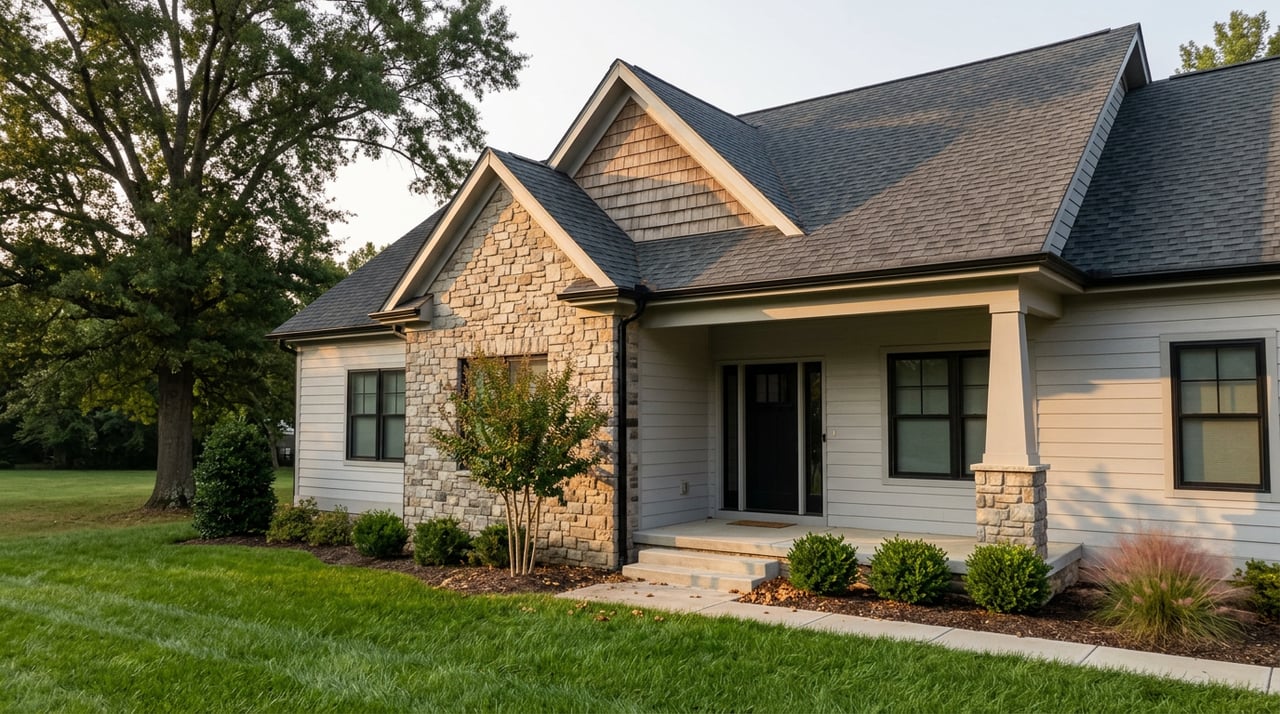
Why does a new-construction sign on Holden Road in Youngsville promise a move-in date next spring, while a nearly identical sign a quarter mile down the same road hasn't moved in two years?
It isn't the builder. It isn't the buyer pool. It's a number most sales offices never mention: gallons per day.
Franklin County, which includes Youngsville, caps how much water and sewer capacity it can hand out to new residential development each year, and it caps how much of that capacity any single subdivision phase can claim. The rule has nothing to do with how fast houses sell. It has everything to do with a regional pipe that was already tight before this decade's growth started, and it explains a pattern that anyone shopping new construction in Youngsville right now is going to run into, whether their agent mentions it or not.
The pipe behind the sales trailer
Franklin County adopted its Water and Sewer Allocation Ordinance in 2017, and the reason sits upstream of any single subdivision. The county buys most of its water through a regional system called KLRWS, which also serves Henderson and Vance counties, and that system is capped at 5 million gallons a day. The county has said publicly that this ceiling will fall short of projected demand for the region by 2040, and that expanding the pipe would cost more than $50 million, an investment that still wouldn't fully close the gap. The county has spent years hunting for new well sites as a partial fix, but the underlying math hasn't changed: there is a hard limit on how much new water and sewer service Franklin County can promise, and the allocation ordinance is how the county decides who gets a piece of it.
That ordinance sets an annual residential allocation of 75,000 gallons per day for the entire county, plus a separate 250,000 gallon reserve for non-residential and county use. It also caps any single subdivision phase at 50 units or lots per calendar year, no matter how large the overall project is or how fast the builder can move dirt.
What 75,000 gallons a day actually buys
The ordinance itself supplies the conversion factor: 250 gallons per day per buildable unit is the standard the county uses to calculate how much allocation a project needs. Run the countywide residential number through that same factor and the abstract gallons turn into something a buyer can actually picture.
| Franklin County figure | What it translates to |
|---|---|
| Countywide residential allocation, per year | 75,000 gallons per day |
| Ordinance's own per-unit water use factor | 250 gallons per day, per buildable unit |
| Theoretical countywide unit ceiling (75,000 ÷ 250) | Roughly 300 new residential units a year, across the whole county |
| Cap on any single subdivision phase | 50 units per calendar year |
| Share of the entire county's annual residential allocation one phase can claim | Up to about one in six |
A single active phase in one Youngsville subdivision can absorb close to a sixth of everything Franklin County is allowed to hand out to residential growth in a given year. That is the mechanism behind the two speeds. It isn't that some builders are better at securing permits. It's that the county only has so many gallons to give out, and once a handful of active phases have claimed their share, the rest of the queue waits for the following year's allocation cycle, or for the next Utility Advisory Committee meeting where unused capacity might free up.
The 30 percent rule that actually sets the calendar
Getting an allocation once doesn't guarantee a smooth follow-up. Under the ordinance's own language, an application for an additional phase of an existing subdivision has to show that 30 percent of the previous phase's allocated units are already homeowner accounts, not builder accounts, before that next phase is even eligible for consideration. A builder can submit the paperwork for phase two 30 days after phase one is approved, but the county won't award it until real buyers have closed and moved in on three out of every ten homes from the prior phase.
Miss that threshold twice in a row and the project doesn't just wait quietly. It loses its place in line entirely and has to reapply, with its position in the queue reset to the date of resubmission. There's also a use-it-or-lose-it clock on the back end: once a major subdivision receives its allocation, it has 24 months to record the final plat or the allocation expires, with only one 12-month extension available.
Put those pieces together and a builder's timeline for opening the next section of a neighborhood depends less on construction scheduling than on how many closings the current phase has already logged and whether the county's Utility Advisory Committee has capacity left to award. That committee meets periodically through the year, most recently scheduled for September 9, 2026, and its recommendations still have to clear the Board of County Commissioners before any confirmation letters go out.
The waiting list has names on it
Franklin County publishes its allocation request list, and the entries aren't abstract. As of the most recent public snapshot, several projects sitting in the queue are in Youngsville itself, clustered on two roads that anyone touring new construction in town will recognize:
- Conyers Meadow Townhomes, Conyers Woods Mixed Use, and Conyers Woods Single Family, all on Holden Road near Horsemans Trail
- Holden Conyers Townhomes, Holden Pond Townhomes, and Holden Woods Townhomes, also on Holden Road
- Stallings Meadow Townes, Stallings Pond Townes, and Stallings Woods Townes on Fish Stallings Road
Meanwhile, other communities on that same corridor already hold active allocation and are building today. Addyson at Holden Road, a Wynn Homes community, sits on the same stretch as three of the queued projects above. A few miles over, Mungo Homes is actively selling in Golden Ridge, Maison Ridge, and Winston Ridge, all inside Youngsville and all drawing on allocation the county has already awarded. Same town, same general growth corridor, two entirely different calendars, and the difference isn't the builder's ambition. It's whether that specific project cleared the county's allocation process before the queue got long.
Meanwhile the resale clock is running slower
The allocation ordinance only touches new hookups and new subdivision phases. It has no bearing on homes already connected to county water and sewer, which is most of the existing resale inventory in Youngsville. And that resale market is telling a different story than the new-construction queue.
As of mid-2026, homes in Youngsville were selling at a median price in the $410,000 to $415,000 range, and the average time on market had stretched to roughly 70 to 80 days, up from the mid-50s to low-60s a year earlier. That's a market with more breathing room for buyers than the phrase "hot Triangle suburb" usually implies. New-construction phases, by contrast, aren't slowing down because of softer demand. They're gated by a fixed annual allocation that doesn't care whether buyer traffic is up or down. A builder can have a full sales pipeline and still not be able to open the next 50 lots until the county's math allows it.
That combination means a buyer comparing a resale home to a new-construction lot in Youngsville right now is really comparing two different kinds of scarcity. One is driven by ordinary supply and demand, and it's currently loosening. The other is a hard regulatory ceiling that has nothing to do with how many people want to live there.
What this actually means before you sign a reservation agreement
If a builder tells you a community is almost sold out and the next phase opens soon, that urgency might be genuine demand, or it might simply mean the current phase hasn't hit its 30 percent homeowner threshold yet and the next release is waiting on a county committee, not on buyer interest. A few questions are worth asking before you get attached to a specific lot:
- Does this subdivision currently hold an active water and sewer allocation from Franklin County, or is it on the county's request list?
- If the current phase is active, roughly what share of it is already closed and occupied by homeowners, versus still held by the builder?
- If a next phase hasn't been awarded yet, has an application even been submitted, and what did the most recent Utility Advisory Committee meeting say about it?
None of this changes whether a particular floor plan or lot is the right fit for a household. It does change how much stock to put in a sales office's timeline, and it's the kind of question a builder's on-site team can usually answer if you ask directly.
A few direct questions
Does the allocation ordinance affect homes that are already built and connected to county water? No. It governs new hookups and new subdivision phases going forward. A resale home already on the system isn't affected by the annual cap.
Is this specific to Youngsville, or does it apply across Franklin County? It's countywide. Youngsville happens to be where a large share of current residential growth and allocation requests are concentrated, which is why the pattern shows up so clearly there.
Can I check a specific subdivision's allocation status myself? Franklin County Public Utilities publishes both the ordinance and the current allocation request list publicly, and its Utility Advisory Committee meetings are open to the public as well.
Buying in a growing town means paying attention to the parts of the process that don't show up on a floor plan. If you're weighing a new-construction lot against a resale home in Youngsville, or trying to figure out what a builder's timeline actually means, I'd love to hear from you. As a broker with a finance background, I spend as much time reading the fine print as I do the listing sheet, and I'm happy to walk through what a specific community's allocation status looks like before you commit to anything.